Dill Pickle Sourdough Bread
Dill pickle sourdough bread made with chopped pickles, fresh dill, and a splash of pickle brine. This savory loaf makes a tasty bread for pickle lovers.
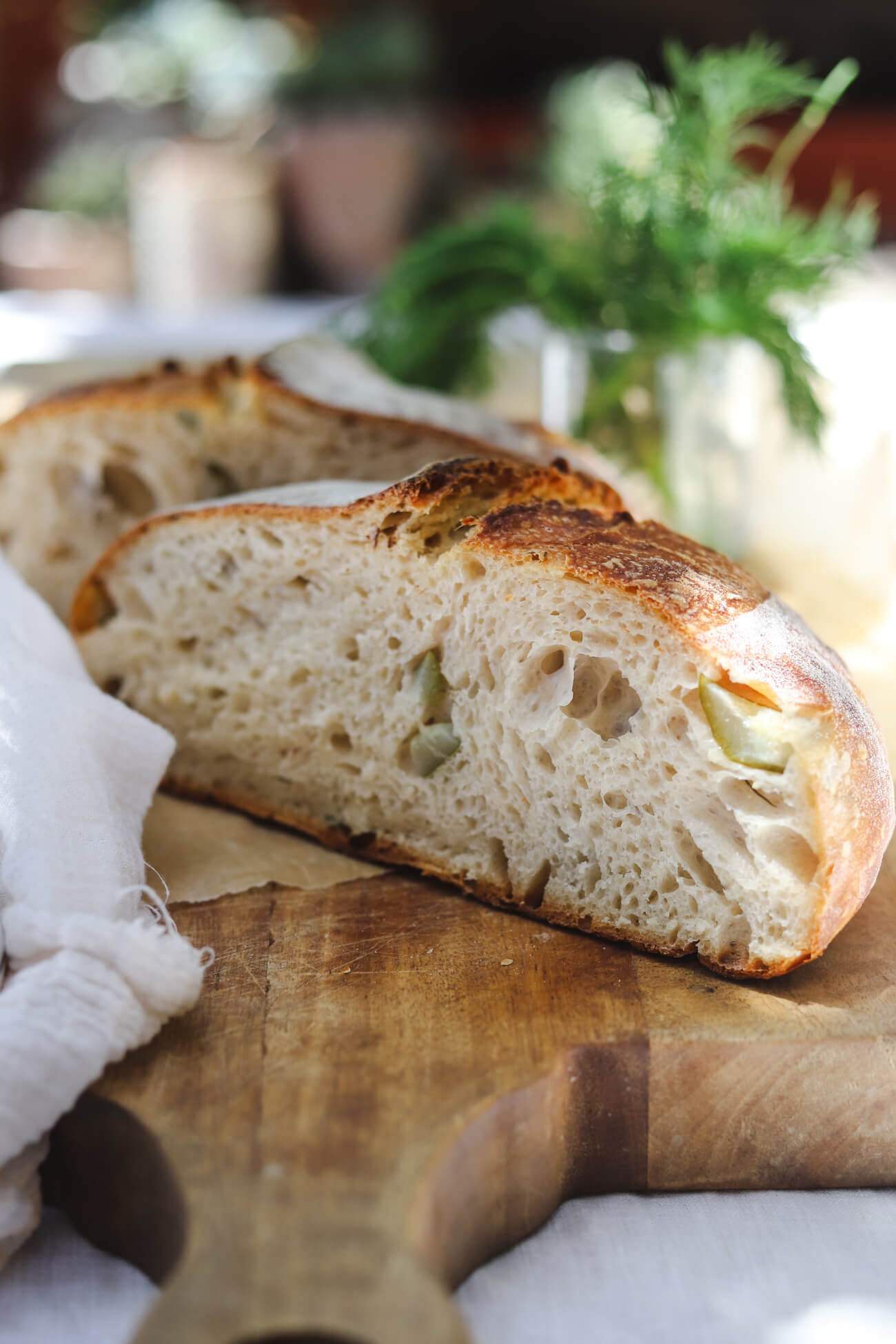
My daughter loves pickles, so naturally, she asked me to make her a loaf of dill pickle sourdough bread.
This was one of those slightly random kitchen experiments that turned out to be very fun and delicious if you’re a pickle person. Chopped dill pickles, fresh dill, and a little pickle brine give my classic sourdough loaf a bright, savory flavor without making it taste overwhelmingly vinegary.
Personally, my jalapeño cheddar sourdough bread is still my favorite savory sourdough variation. But if you love pickles, you really have to try this one.
The loaf is especially good for turkey, tuna, or vegetable sandwiches. It would also be perfect on a snack board with hummus, crudités, cheese, and… more pickles.
Why You’ll Love This Pickle Sourdough Bread
This savory sourdough loaf is:
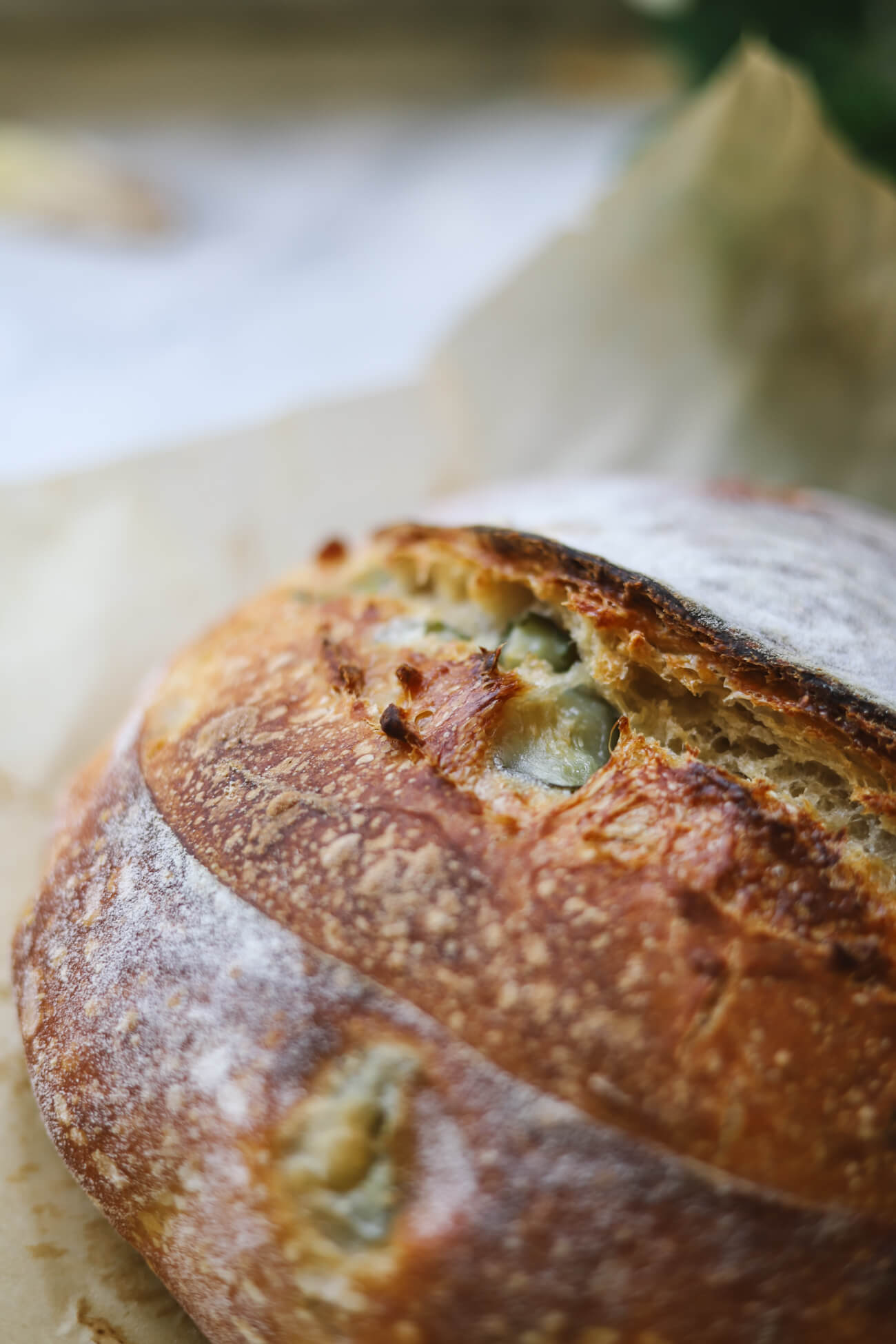
- Filled with little bites of dill pickle
- Flavored with fresh dill and pickle brine
- Tangy and savory without being overly sour
- Made from my easy higher-hydration sourdough recipe – so it’s crusty on the outside and soft on the inside
- Delicious for sandwiches, avocado toast, and snack boards
- A fun homemade bread for any pickle lover
Ingredients You’ll Need
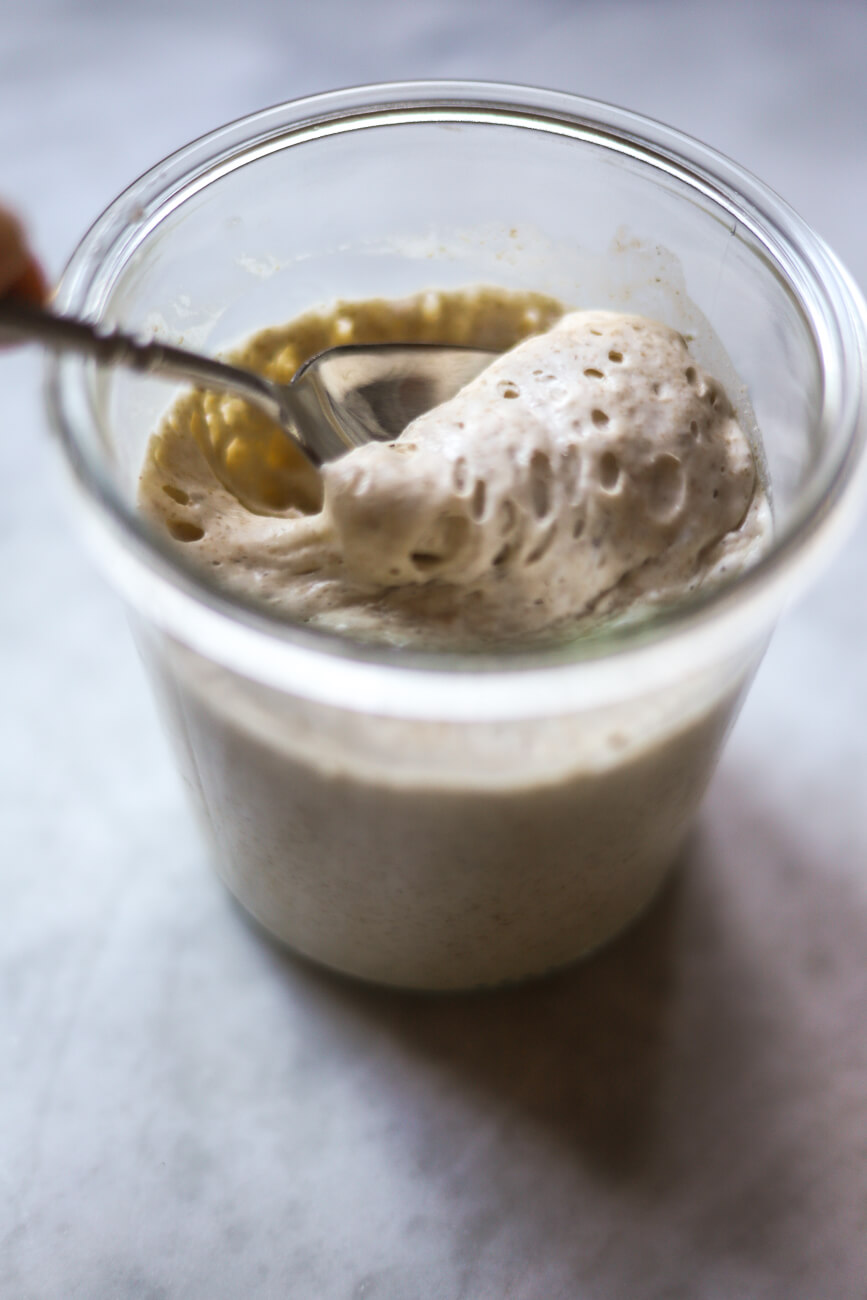
Active sourdough starter
Use an active, bubbly, strong sourdough that has recently been fed and is at or near its peak. A strong starter will give this heavier, add-in-filled dough the best rise.
Water and pickle brine
My usual sourdough recipe calls for 375 grams of water. For this loaf, I replaced 30 grams of the water with dill pickle brine.
The brine adds mild pickle flavor throughout the dough without making it too intense. Use brine from pickles you genuinely like, since the flavor will come through in the finished bread.
Bread flour
Bread flour provides enough protein and structure for a high-hydration dough, particularly once the chopped pickles are added. I use King Arthur Organic Bread Flour.
Dill pickles
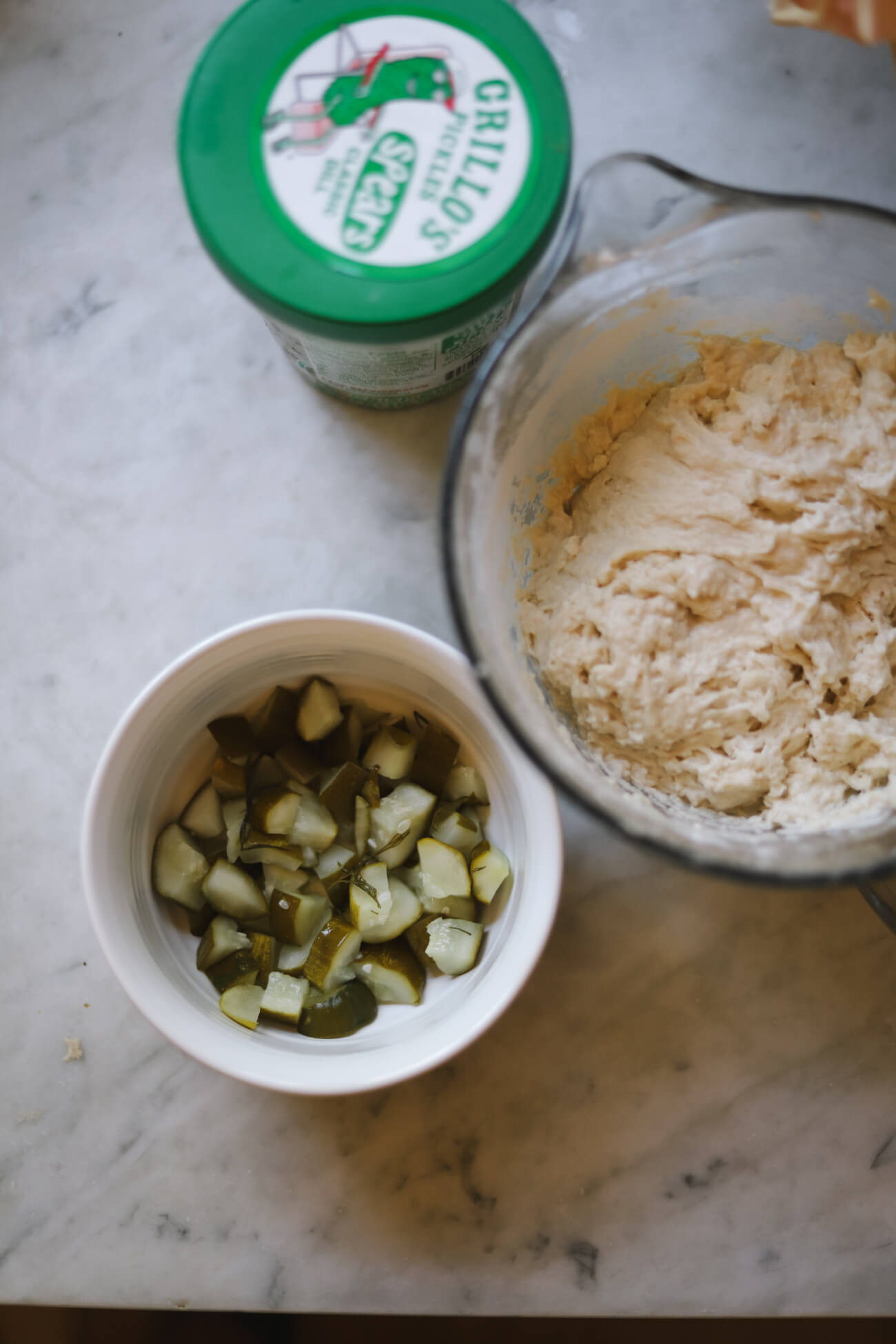
I used Grillo’s dill pickle spears because they have a fresh, garlicky flavor and a good crunch.
Chop the pickles into pieces approximately ½ to ¾ inch in size. Avoid chopping them too finely, or they can disappear into the dough and release more moisture.
Be sure to blot the chopped pickles very well with a clean kitchen towel or paper towels before adding them. Pickles hold quite a bit of brine, and too much additional liquid can make the dough difficult to shape.
Fresh dill
Fresh dill reinforces the pickle flavor and adds pretty green flecks throughout the loaf.
I used approximately 2 tablespoons of chopped fresh dill, though you can add a little more or less according to taste. It’s not overpowering here at all, so feel free to be heavy-handed with it.
Fine sea salt
Salt strengthens the dough and balances the sour, herbal flavor. Because pickle brine is already salty, this recipe uses the same moderate amount of salt as my basic sourdough loaf.
How to Make Dill Pickle Sourdough Bread
1. Mix the starter, water, and pickle brine
Add the active sourdough starter, lukewarm water, and pickle brine to a large mixing bowl.
Stir with a fork or dough whisk until the starter has mostly dissolved into the liquid.
2. Add the flour and salt
Add the bread flour and salt, and mix until no dry patches remain.
The dough will look very wet, rough, and shaggy at this point. I find it’s easiest to use your hands to combine the ingredients at this point. Cover the bowl with a damp kitchen towel and let it rest for 30 minutes to 1 hour.
This resting period, often called an autolyze, gives the flour time to absorb the liquid before the bulk rise.
3. Add the pickles
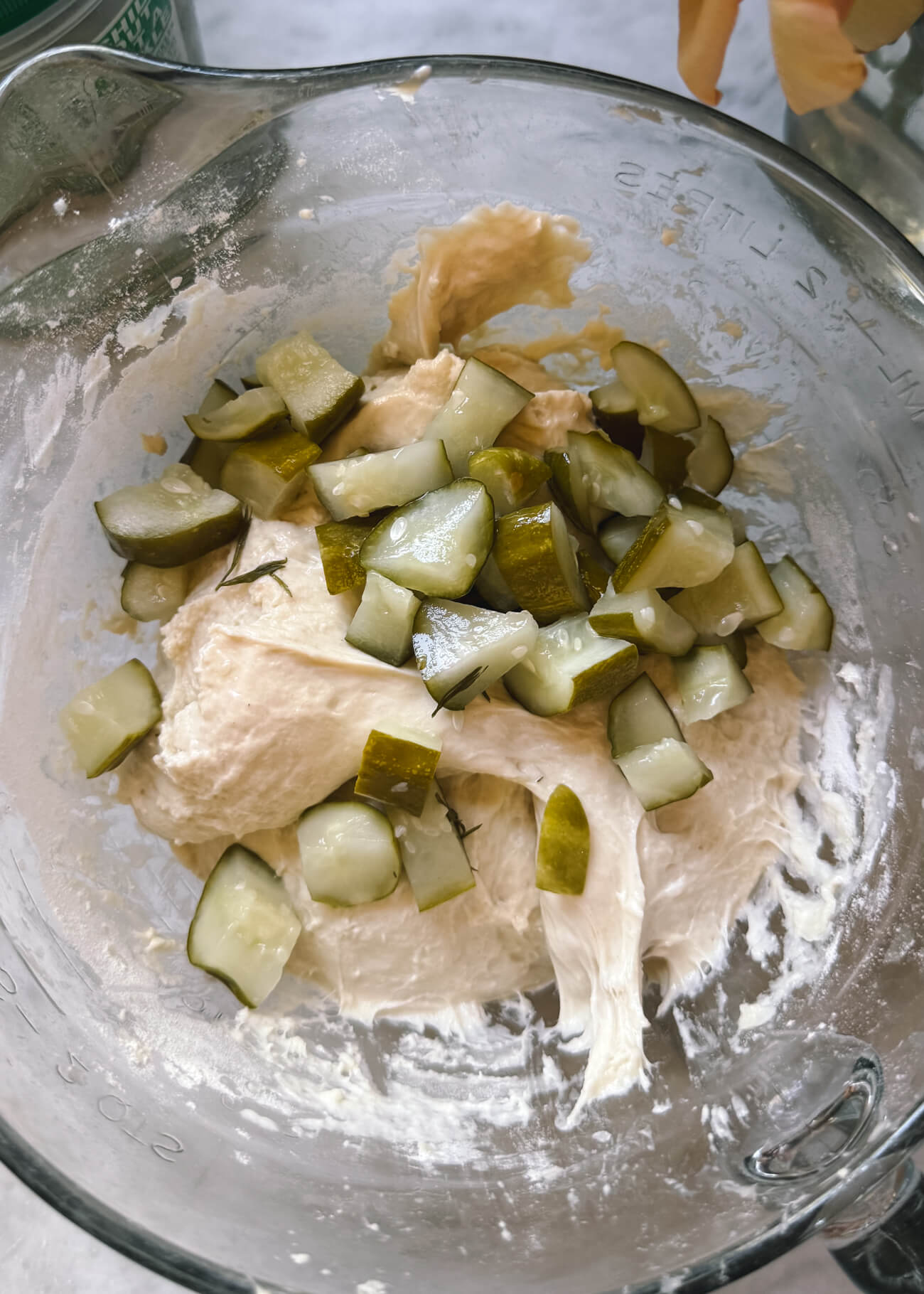
Blot the chopped pickles thoroughly, then add them to the bowl. Use damp hands to gently squeeze, fold, and work the pickles into the dough until they are reasonably well distributed.
The dough may feel slippery or slightly looser after adding the pickles. That is normal, and it’s okay if it’s hard to incorporate the pickles. Continue folding gently and don’t add extra flour.
You can also laminate the pickles in just before shaping, if you prefer.
4. Let the dough bulk rise
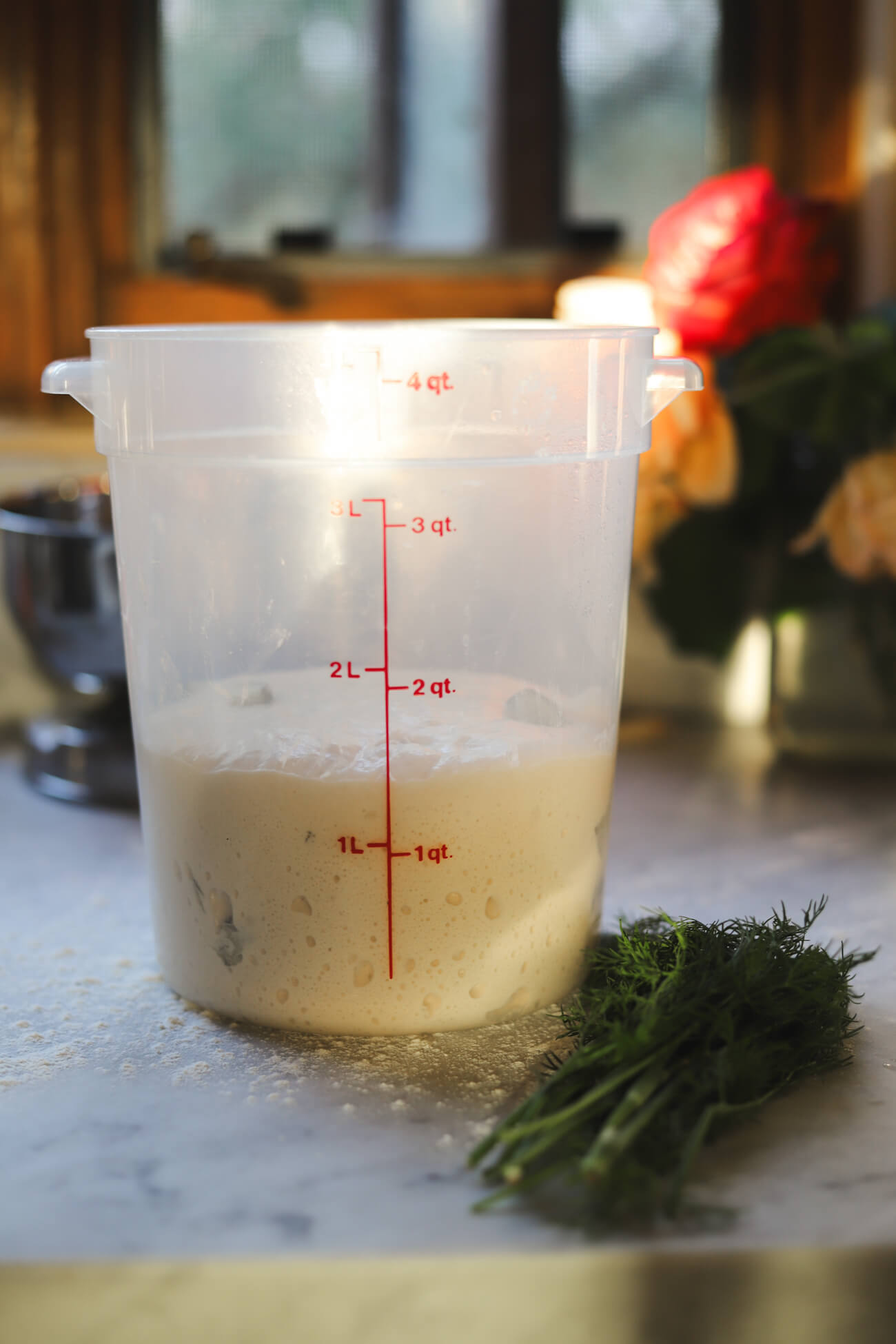
Cover the bowl and let the dough rise in a warm, draft-free place until it looks puffy and has nearly doubled in volume.
Depending on the temperature of your kitchen and the strength of your starter, this may take approximately 8 hours at around 70°F, but really varies.
During the first hour of bulk fermentation, you can perform a few sets of stretch-and-folds to help strengthen the dough, but it’s optional.
As always with sourdough, watch the dough rather than relying only on the clock. It should look aerated, slightly domed, and nearly doubled in size. A clear, straight-edged container makes it easy to see when the dough is ready.
When Should I Add the Pickles and Dill?
There are two good ways to add the pickle mixture.
Option 1: Add the pickles before bulk fermentation
This is how I made mine. I added the chopped, well-blotted pickles after the initial rest and let them ferment with the dough during the bulk rise.
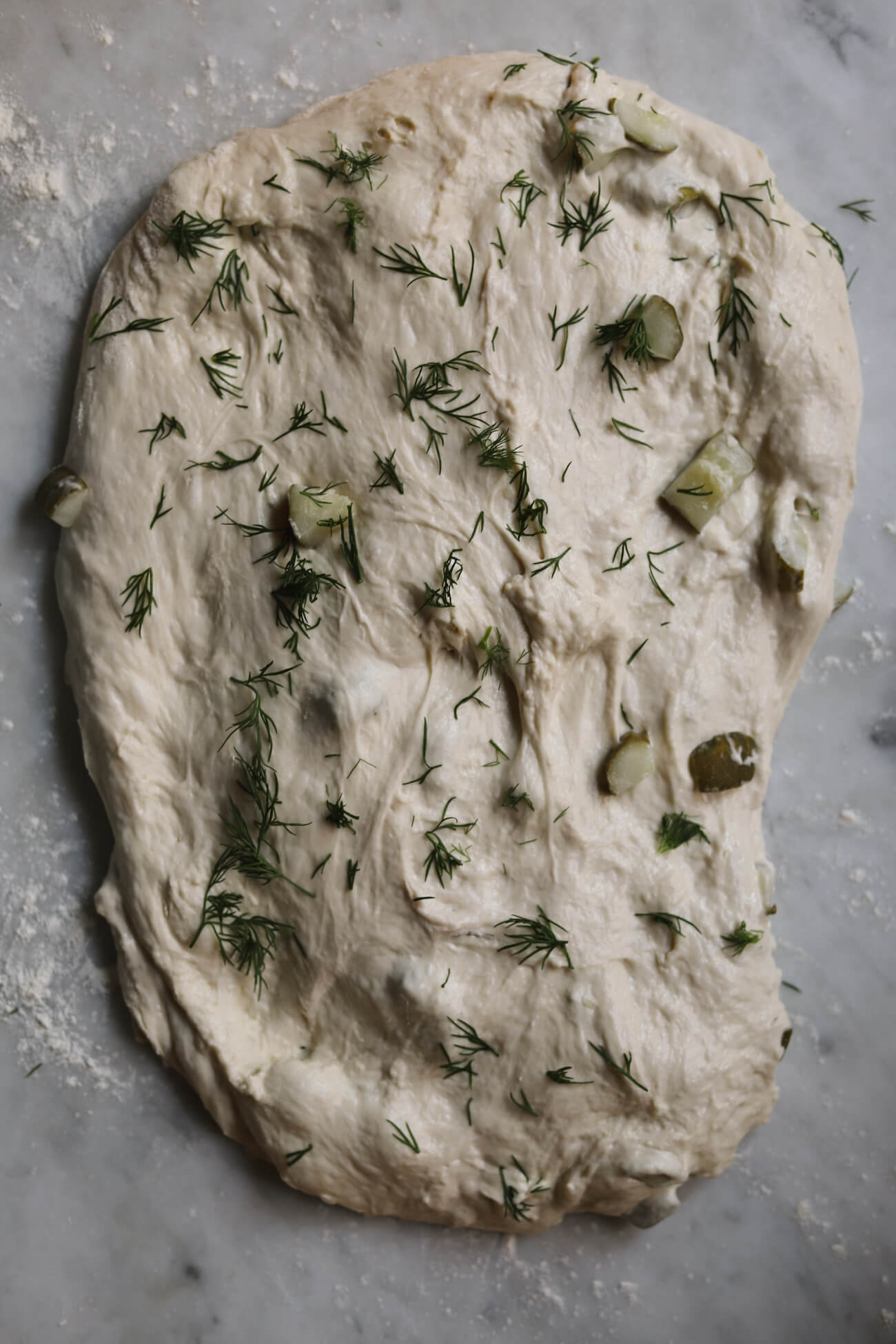
I then laminated in the fresh dill just before shaping.
This method distributes the pickle flavor throughout the dough and leaves more visible ribbons of fresh dill.
Option 2: Laminate in both the pickles and dill
You can also complete the bulk rise without either add-in, then laminate both the pickles and fresh dill into the dough before shaping.
This may be the easier option if you’re concerned about the wet pickles interfering with gluten development. It also creates more distinct pockets of pickle and dill throughout the sliced loaf.
Either method works. The most important step is blotting the pickles very well before they touch the dough.
Tips for the Best Dill Pickle Sourdough Bread
Blot the pickles thoroughly
Pickle pieces carry a surprising amount of liquid, even after they have been drained.
Spread the chopped pickles over a clean towel or several layers of paper towels and gently press out as much moisture as possible.
Don’t add extra flour
The dough may feel wetter after the pickles are mixed in. Give it time and use stretch-and-folds to build strength rather than adding extra flour. This is a higher hydration sourdough, which produces an airy interior.
Use pickles you love
The bread will carry the flavor of both the pickles and their brine. A crisp, refrigerated dill pickle works especially well.
Let the loaf cool completely
The pickles add moisture to the crumb, so cooling is particularly important for this loaf.
Suggested Sourdough-Baking Timeline
This is the schedule that works best for me. I like to mix the dough in the morning, let it bulk ferment during the day, refrigerate it overnight, and bake it the next day whenever it’s convenient.
The night before:
If your sourdough starter needs feeding, feed it before bed so it is active and ready to use in the morning. My starter is quite strong at this point, so I often use it straight from the refrigerator without feeding first.
8–9 a.m.: Mix the dough
Mix the starter, water, pickle brine, flour, and salt. Let the dough rest for 30 minutes to 1 hour.
9–11 a.m.: Add the pickles and stretch-and-fold
Fold in the well-blotted chopped pickles, then complete 2–3 additional sets of stretch-and-folds about 30 minutes apart, if you have time.
Late morning through afternoon: Bulk rise
Let the dough rise until it has nearly doubled and looks bubbly and aerated. In my kitchen, around 70°F, this usually takes about 5 to 8 hours total from mixing.
Late afternoon or evening: Laminate, shape, and refrigerate
Laminate in the fresh dill, shape the loaf, place it in the proofing basket, cover, and refrigerate overnight.
The next day: Bake anytime
Preheat the Dutch oven, score the cold dough, and bake it straight from the refrigerator. I love this schedule because there’s no need to time the baking precisely the night before.
What Does Pickle Sourdough Bread Taste Like?
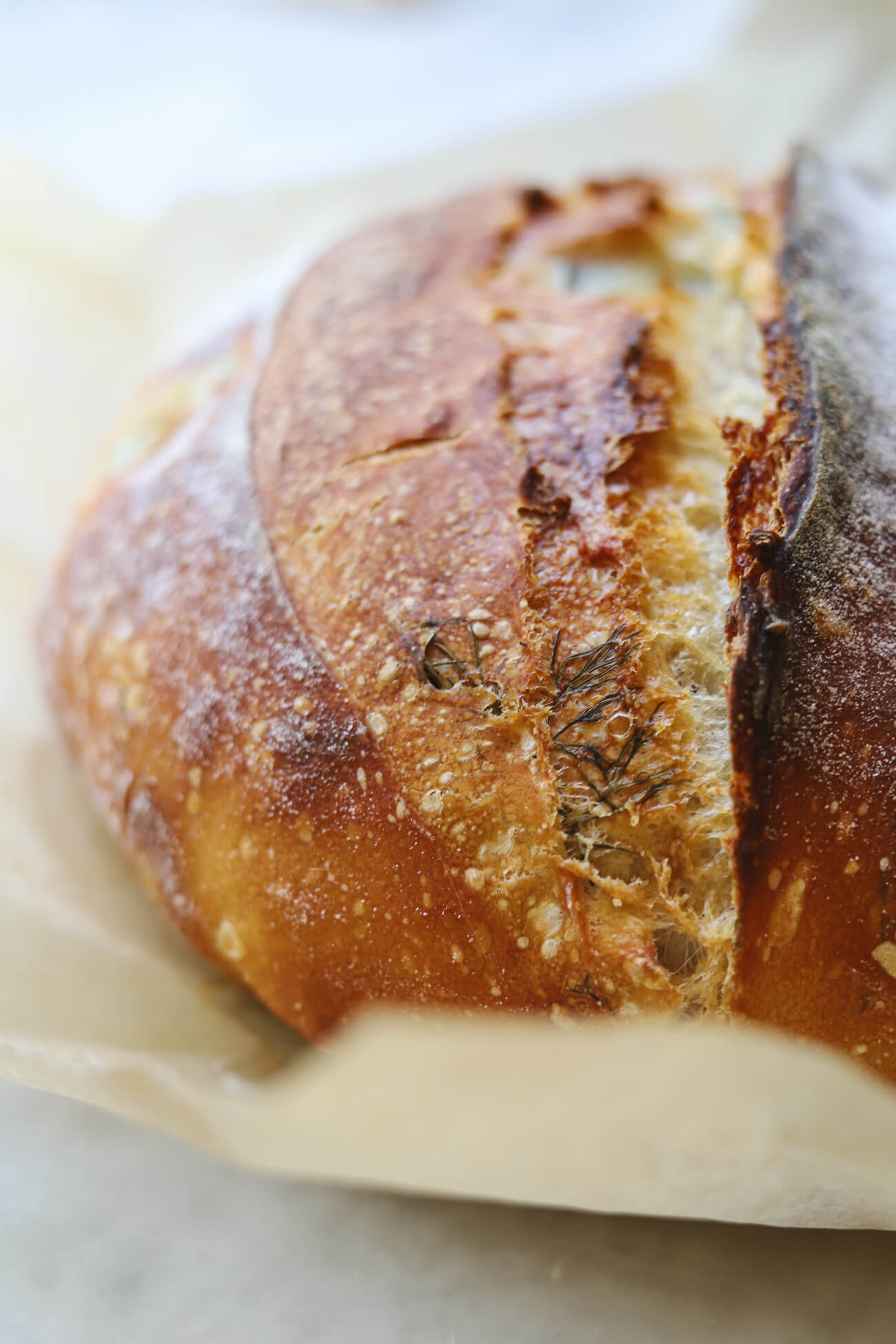
This bread tastes like classic rustic sourdough with a distinctly savory dill-pickle flavor. The aroma while baking is so fun with this one!
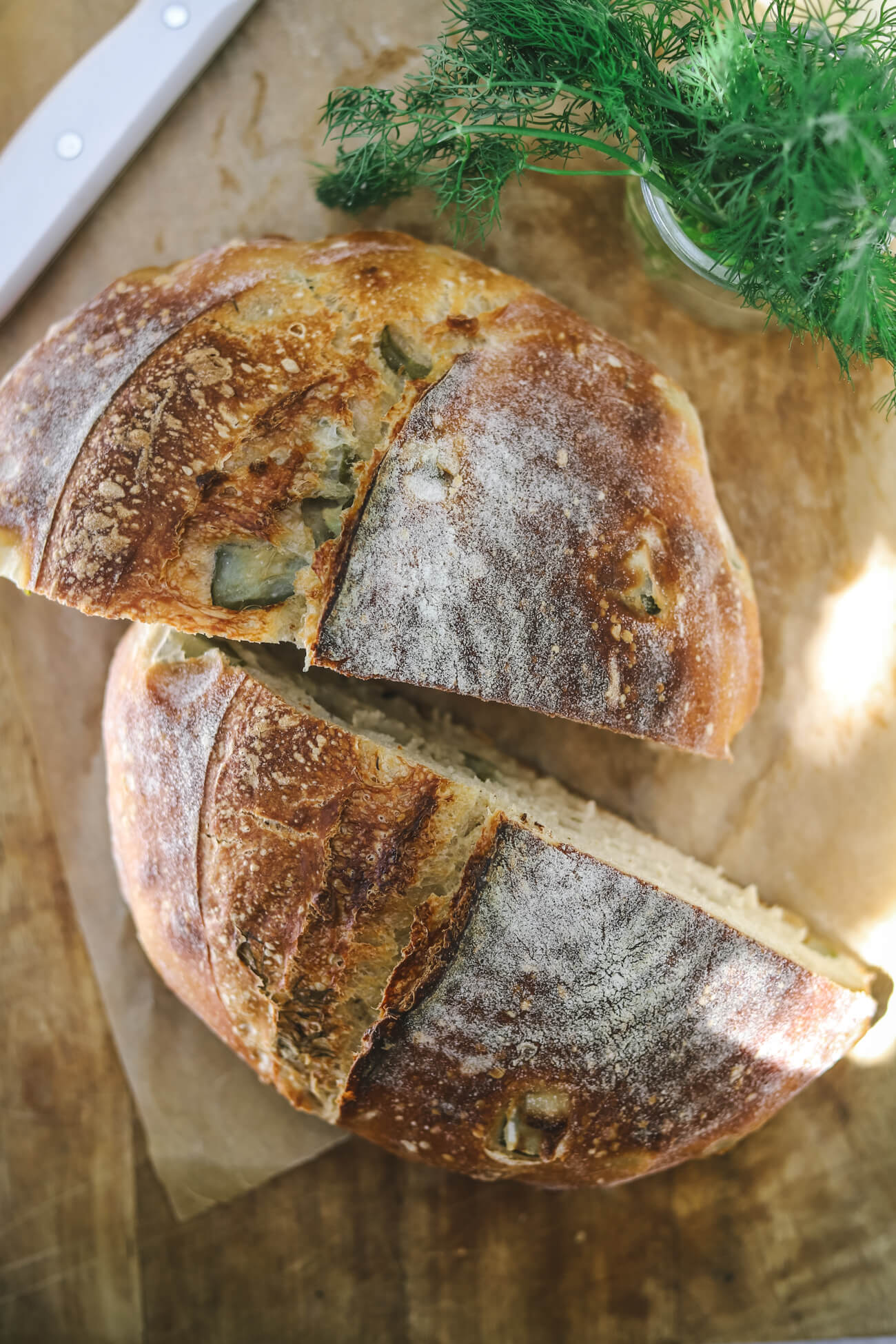
The pickle brine seasons the entire loaf, while the chopped pickles create occasional brighter, tangier bites. Fresh dill adds a clean herbal flavor that keeps the bread tasting fresh rather than overly salty or vinegary.
It’s noticeably pickle-flavored, but it doesn’t taste like eating a whole jar of pickles in bread form.
How to Serve Dill Pickle Sourdough Bread
This is one of the best sourdough loaves for savory sandwiches.
Try it with:
- Avocado toast
- Turkey, cheddar, lettuce, and mustard
- Tuna salad
- Chickpea salad
- Hummus, cucumber, sprouts, and tomato
- Grilled cheese
- Egg salad
- Smoked salmon and cream cheese
- Avocado and sliced tomato
It would also be delicious sliced and served with hummus and fresh vegetables as part of a snack board.
How to Store Pickle Sourdough Bread
Let the loaf cool completely before storing it.
Keep it cut-side down on a cutting board for the first day, or place it in a bread bag or loosely closed container. The crust will soften once the loaf is stored airtight.
Because the pickles add moisture, I recommend enjoying this bread within two days at room temperature.
For longer storage, slice the completely cooled loaf and freeze it in an airtight freezer-safe container. Toast individual slices directly from frozen.
Frequently Asked Questions
Can I make sourdough bread with pickle juice?
Yes. Pickle juice or pickle brine can replace a small portion of the water in sourdough bread.
For this recipe, I replaced 30 grams of the water with pickle brine. This adds noticeable flavor without introducing so much salt and acidity that it interferes with fermentation.
I would not replace all the water with pickle juice.
What type of pickles are best for pickle bread?
Refrigerated dill pickles with a fresh, crisp flavor work especially well. I used Grillo’s dill pickles.
Avoid very sweet bread-and-butter pickles unless you intentionally want a sweet-and-savory loaf.
Can I use dried dill instead of fresh dill?
Fresh dill gives this bread the best flavor and appearance.
In a pinch, you could try approximately 1 to 2 teaspoons of dried dill, but the flavor will be more concentrated and slightly different. Add dried dill with the salt rather than during lamination.
Is dill pickle sourdough bread very sour?
It is tangier than plain sourdough because of the pickles, but it should not be unpleasantly sour.
A very long bulk fermentation or overnight cold proof will increase the acidity. Use a shorter fermentation schedule for a milder loaf.
Can I add cheese?
Yes. Cheddar would be especially good with the pickles and dill.
I would add approximately 100 to 150 grams of small cheddar cubes during lamination. Blot the pickles especially well because the extra filling will make the dough heavier.
Dill Pickle Sourdough Bread
A savory dill pickle sourdough bread made with chopped pickles, fresh dill, and pickle brine. It’s perfect for turkey, tuna, hummus, or vegetable sandwiches.

Ingredients
- 90 grams active sourdough starter
- 345 grams lukewarm water
- 30 grams dill pickle brine
- 500 grams bread flour
- 9 grams fine sea salt
- 90 grams dill pickles, chopped into ½- to ¾-inch pieces and thoroughly blotted dry
- 2 tablespoons chopped fresh dill
Instructions
- Mix the dough: Add the active sourdough starter to a medium bowl. Stir in the lukewarm water and pickle brine until combined. Add the bread flour and sea salt, then mix with a rubber spatula or wooden spoon. Use your hands to thoroughly combine the dough. It will be very shaggy, sticky, and difficult to work with at this stage. This is normal, so do not add any additional flour.

- Rest the dough: Cover the bowl with a damp kitchen towel and let the dough rest for 30 minutes to 1 hour. During this time, the flour will hydrate, and the gluten will begin to develop, making the dough much easier to handle.
- Add the pickles: While the dough rests, chop the pickles into approximately ½- to ¾-inch pieces. Spread them over a clean kitchen towel or paper towels and blot thoroughly to remove as much excess brine as possible. Add the blotted pickles to the dough and gently fold them in with your hands until evenly distributed. It's normal if they are difficult to incorporate at this point.

- Stretch and fold: Grab one side of the dough, gently stretch it upward, and fold it into the center. Rotate the bowl and repeat three more times, working your way around the dough. Cover with the damp towel again. If possible, repeat this stretch-and-fold process two or three more times at 30-minute intervals. This helps strengthen the dough and create a more open crumb, but don’t worry if you only have time for one set.
- Bulk rise: If possible, transfer the dough to a straight-sided container so you can more easily see how much it has risen. A medium-large bowl also works. Cover and let the dough rise until it has doubled, or nearly doubled, in size. You should see bubbles along the sides and underneath if using a clear container. The timing will depend on the temperature of your home and the strength of your starter. In a 70°F kitchen, this usually takes about 5 to 8 hours, with much of the rise happening toward the end. If the bulk rise is complete but you aren’t ready to shape the dough, cover and refrigerate it until you are ready to continue.

- Laminate in the dill: Lightly flour your work surface and gently coax the dough out of the container. Carefully stretch it into a wide rectangle without pressing out the air. Sprinkle the chopped fresh dill evenly over the surface. Fold the dough into thirds like a letter, then fold it again in the opposite direction to form a compact parcel.
- Pre-shape: Gently form the dough into a loose ball and let it rest for 5 to 10 minutes while you prepare the proofing basket.
- Prepare the proofing basket: Line a banneton or medium bowl with a thin kitchen towel and dust lightly with flour (white rice flour works best, if you have it).
- Final shape: Gently flip the dough over and shape it into a boule or bâtard. Cup your hands around the dough and pull it toward you across the work surface to create tension on the outside.
- Final rise: Place the shaped dough into the prepared basket with the smooth side facing down. Stitch the dough by gently pulling a few sections from the sides up and into the center to create additional tension. Cover and refrigerate for at least 1 hour or overnight. It will be easier to work with if refrigerated overnight. Place the basket inside a plastic bag or cover it with plastic wrap so the dough does not dry out.
- Preheat the oven: Place a Dutch oven and its lid in the oven. Preheat to 500°F for 40 minutes.
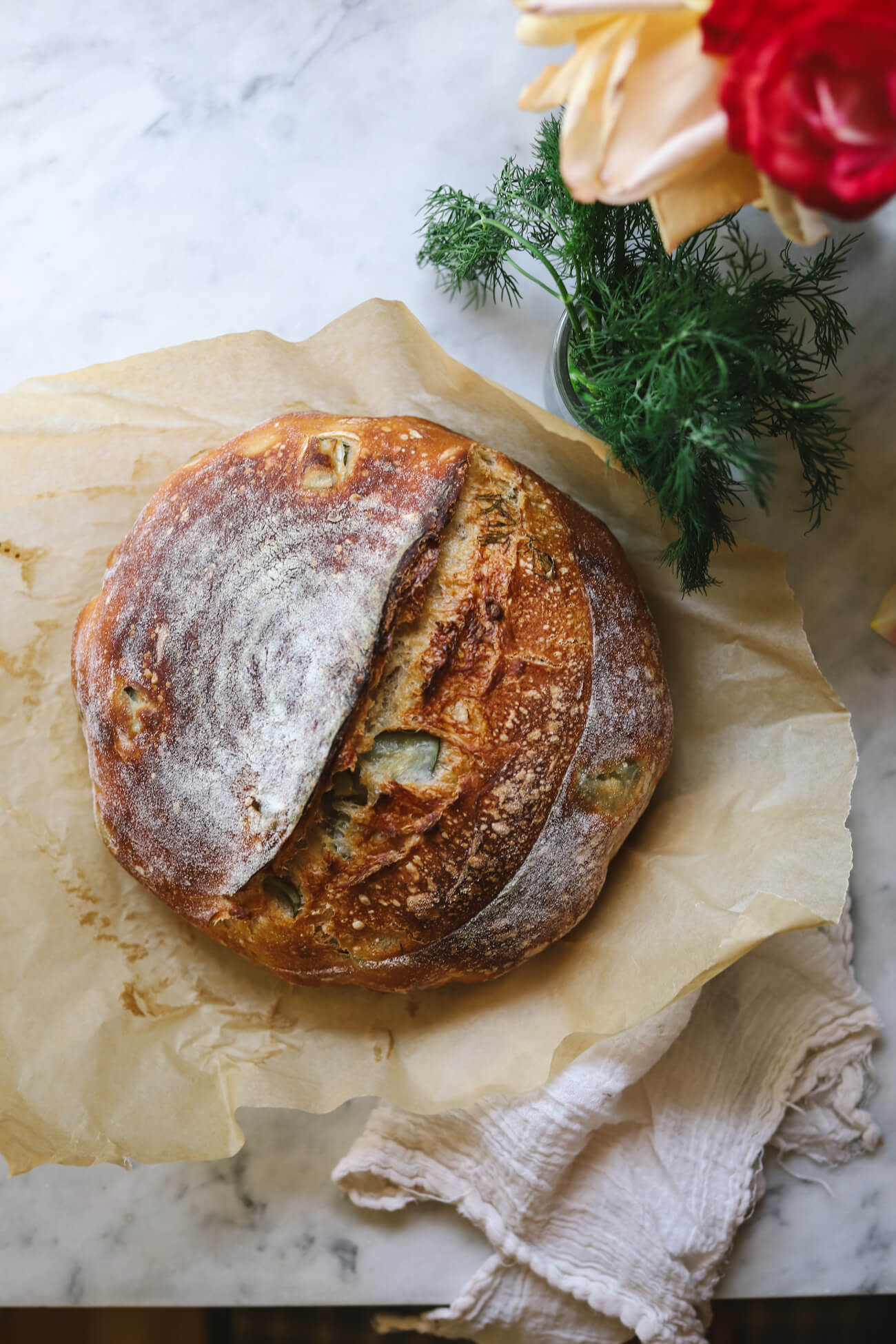
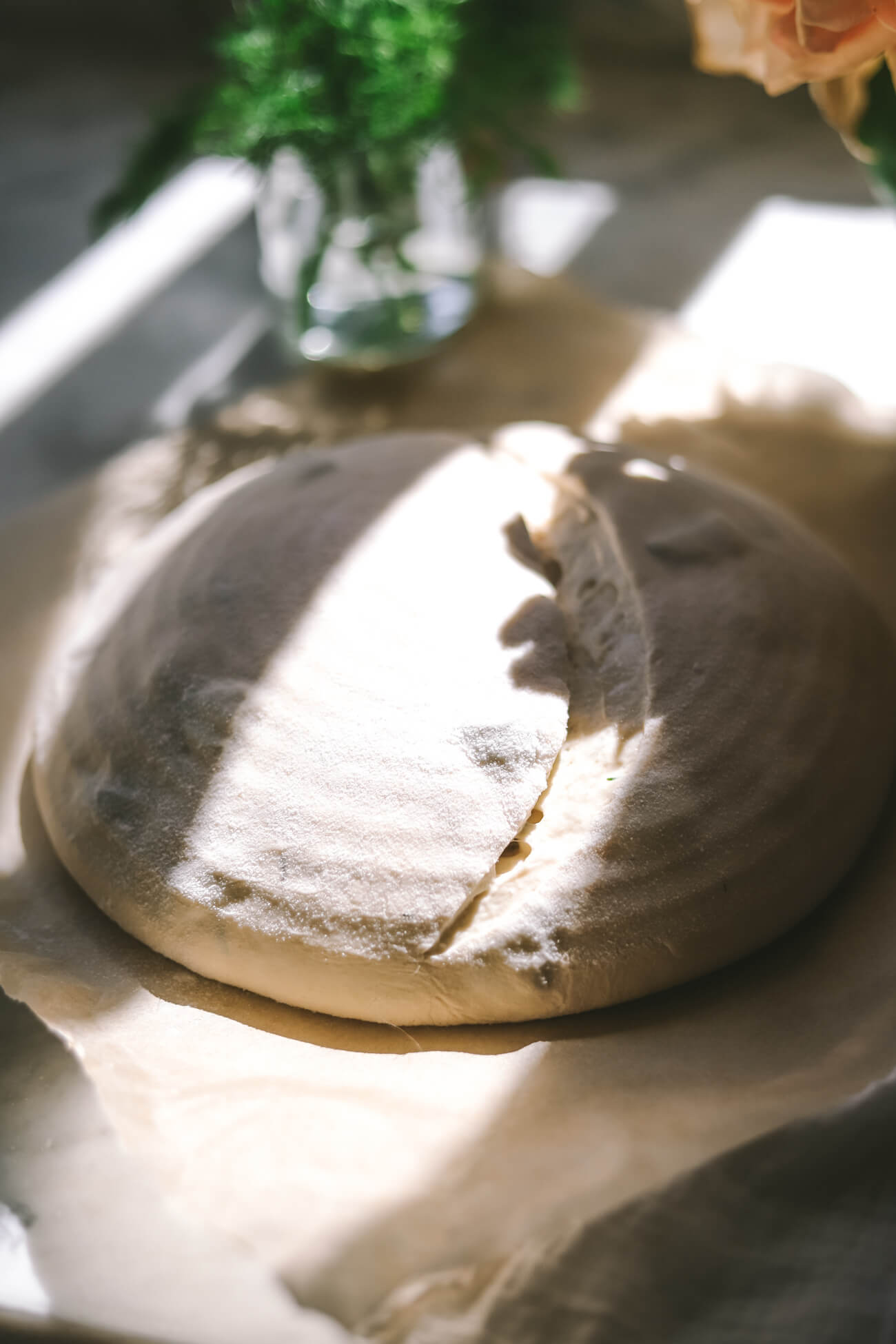
- Score the dough: Place a sheet of parchment paper over the proofing basket and invert the dough onto your work surface. Dust the top with rice flour or bread flour. Use a sharp bread lame or knife to score the loaf. For this loaf, do one cut about ¾ inch deep, to give the bread room to expand. I avoid shallow decorative cuts on this one to keep the inclusions inside.
- Bake: Carefully remove the hot Dutch oven from the oven. Use the parchment paper to lower the dough into the pot. Cover and return it to the oven. Immediately reduce the temperature to 450°F and bake covered for 20 minutes. Remove the lid and bake for another 30 to 35 minutes, until the crust is deeply golden brown. The bread is fully baked when the center reaches approximately 205°F.
- Cool: Carefully remove the dill pickle sourdough bread from the Dutch oven and transfer it to a cooling rack. Let it cool for at least 1 hour before slicing. The crumb will continue to set and retain moisture as the loaf cools.

Notes
- I used Grillo’s dill pickles, but another crisp dill pickle will work.
- Blot the chopped pickles very thoroughly before adding them. Excess brine can make the dough overly wet.
- Instead of adding the pickles before bulk fermentation, you can laminate both the pickles and dill into the dough after bulk fermentation.
- Pickle brine adds both salt and acidity. I do not recommend replacing all the water with brine.
- An overnight refrigerated proof will produce a more pronounced sour flavor, will be easier to work with, and is what I recommend.
- The dough can be baked directly from the refrigerator.
- Fermentation time will vary depending on room temperature and the strength of your starter.
- Let the loaf cool completely before slicing, as the pickles add extra moisture to the crumb.
Recommended Products
As an Amazon Associate and member of other affiliate programs, I earn from qualifying purchases.


Nutrition Information:
Yield: 12 Serving Size: 1 sliceAmount Per Serving: Calories: 173Total Fat: 1gSaturated Fat: 0gUnsaturated Fat: 1gSodium: 422mgCarbohydrates: 35gFiber: 1gSugar: 1gProtein: 6g
Nutrition information is automatically calculated by Nutritionix. I am not a nutritionist and cannot guarantee accuracy. If your health depends on nutrition information, please calculate again with your favorite calculator.